Hey diddle diddle, The cat and the fiddle, The cow jumped over the moon. The little dog laughed to see such sport, And the dish ran away with the spoon.
“Hey Diddle Diddle” is a whimsical and nonsensical nursery rhyme that captures children’s imaginations with its playful and fantastical imagery. The rhyme features various anthropomorphic animals engaging in humorous and improbable activities, such as a cow jumping over the moon and a dish running away with a spoon. This nursery rhyme is often recited to young children to entertain them and introduce them to the joy of language and storytelling. Its catchy rhythm and memorable characters have made it a beloved classic among children of all ages.
I’m a little teapot, short and stout, Here is my handle, here is my spout. When I get all steamed up, hear me shout, Tip me over and pour me out!
I’m a little teapot, short and stout, Here is my handle, here is my spout. When I get all steamed up, hear me shout, Tip me over and pour me out!
“I’m a Little Teapot” is a classic nursery rhyme that is often accompanied by actions, where children mimic the shape of a teapot with their bodies. It’s a playful and fun song that teaches children about the concept of pouring and introduces them to the idea of objects having handles and spouts. The rhyme is known for its simple yet catchy melody and is a popular choice among preschoolers during playtime and music sessions.
Rain, rain, go away, Come again another day. Little Johnny wants to play; Rain, rain, go away.
Rain, rain, go away, Come again another day. Little Suzy wants to play; Rain, rain, go away.
Rain, rain, go away, Come again another day. Little Tommy wants to play; Rain, rain, go away.
Rain, rain, go away, Come again another day. Little Emily wants to play; Rain, rain, go away.
“Rain, Rain, Go Away” is a popular nursery rhyme that children often sing when they wish for the rain to stop so they can play outside. The repetitive and catchy melody makes it a fun and easy rhyme for young kids to remember and sing along to. It’s a lighthearted and cheerful song that has been enjoyed by generations of children.
A, B, C, D, E, F, G H, I, J, K, L, M, N, O, P Q, R, S, T, U, V W, X, Y, and Z
Now I know my ABCs, Next time won’t you sing with me!
“The Alphabet Song” is a classic nursery rhyme and is often used to help children learn and memorize the letters of the alphabet. The simple melody and repetition make it easy for young learners to sing along and remember the sequence of letters.
If you’re happy and you know it, Clap your hands. If you’re happy and you know it, Clap your hands. If you’re happy and you know it, Then your face will surely show it. If you’re happy and you know it, Clap your hands.
If you’re happy and you know it, Stomp your feet. If you’re happy and you know it, Stomp your feet. If you’re happy and you know it, Then your face will surely show it. If you’re happy and you know it, Stomp your feet.
If you’re happy and you know it, Shout “Hooray!” If you’re happy and you know it, Shout “Hooray!” If you’re happy and you know it, Then your face will surely show it. If you’re happy and you know it, Shout “Hooray!”
If you’re happy and you know it, Do all three (clap your hands, stomp your feet, and shout “Hooray!”). If you’re happy and you know it, Do all three (clap your hands, stomp your feet, and shout “Hooray!”). If you’re happy and you know it, Then your face will surely show it. If you’re happy and you know it, Do all three (clap your hands, stomp your feet, and shout “Hooray!”).
The rhyme is usually accompanied by corresponding actions (clapping hands, stomping feet, and shouting “Hooray!”), making it a delightful and interactive song for young children to express their happiness and learn about different actions.
Head, shoulders, knees, and toes, Knees and toes. Head, shoulders, knees, and toes, Knees and toes.
Eyes and ears and mouth and nose, Head, shoulders, knees, and toes, Knees and toes.
With each repetition, you touch the corresponding body part as you sing the rhyme, making it a fun and interactive activity for young children. It helps them learn body parts, improve coordination, and develop their motor skills. The rhyme is also often used as a warm-up exercise in preschools and early education settings.
Five little monkeys jumping on the bed, One fell off and bumped his head. Mama called the doctor and the doctor said, “No more monkeys jumping on the bed!”
Four little monkeys jumping on the bed, One fell off and bumped his head. Mama called the doctor and the doctor said, “No more monkeys jumping on the bed!”
Three little monkeys jumping on the bed, One fell off and bumped her head. Mama called the doctor and the doctor said, “No more monkeys jumping on the bed!”
Two little monkeys jumping on the bed, One fell off and bumped his head. Mama called the doctor and the doctor said, “No more monkeys jumping on the bed!”
One little monkey jumping on the bed, He fell off and bumped his head. Mama called the doctor and the doctor said, “Put that monkey right to bed!”
The rhyme is a classic nursery rhyme that has been enjoyed by children for generations. It’s a simple story with a clear message of safety. The monkeys are told not to jump on the bed because it’s dangerous. If they fall off, they could hurt themselves. The rhyme is a reminder to children to be careful and to listen to their parents.
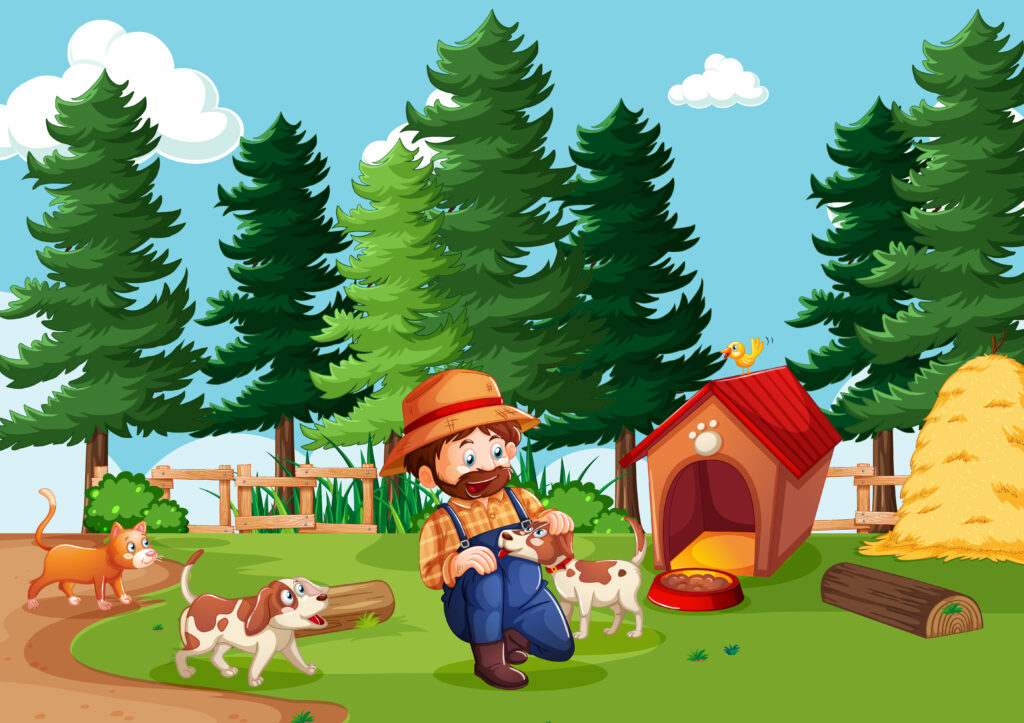
Old MacDonald had a farm, E-I-E-I-O And on that farm, he had a cow, E-I-E-I-O With a “moo-moo” here and a “moo-moo” there Here a “moo,” there a “moo” Everywhere a “moo-moo” Old MacDonald had a farm, E-I-E-I-O
Old MacDonald had a farm, E-I-E-I-O And on that farm, he had a pig, E-I-E-I-O With an “oink-oink” here and an “oink-oink” there Here an “oink,” there an “oink” Everywhere an “oink-oink” Old MacDonald had a farm, E-I-E-I-O
Old MacDonald had a farm, E-I-E-I-O And on that farm, he had a duck, E-I-E-I-O With a “quack-quack” here and a “quack-quack” there Here a “quack,” there a “quack” Everywhere a “quack-quack” Old MacDonald had a farm, E-I-E-I-O
Old MacDonald had a farm, E-I-E-I-O And on that farm, he had a sheep, E-I-E-I-O With a “baa-baa” here and a “baa-baa” there Here a “baa,” there a “baa” Everywhere a “baa-baa” Old MacDonald had a farm, E-I-E-I-O
Old MacDonald had a farm, E-I-E-I-O And on that farm, he had some chicks, E-I-E-I-O With a “chick-chick” here and a “chick-chick” there Here a “chick,” there a “chick” Everywhere a “chick-chick” Old MacDonald had a farm, E-I-E-I-O
Old MacDonald had a farm, E-I-E-I-O And on that farm, he had a horse, E-I-E-I-O With a “neigh-neigh” here and a “neigh-neigh” there Here a “neigh,” there a “neigh” Everywhere a “neigh-neigh” Old MacDonald had a farm, E-I-E-I-O
Old MacDonald had a farm, E-I-E-I-O And on that farm, he had some dogs, E-I-E-I-O With a “woof-woof” here and a “woof-woof” there Here a “woof,” there a “woof” Everywhere a “woof-woof” Old MacDonald had a farm, E-I-E-I-O
Old MacDonald had a farm, E-I-E-I-O And on that farm, he had some cats, E-I-E-I-O With a “meow-meow” here and a “meow-meow” there Here a “meow,” there a “meow” Everywhere a “meow-meow” Old MacDonald had a farm, E-I-E-I-O
Old MacDonald had a farm, E-I-E-I-O And on that farm, he had some ducks, E-I-E-I-O With a “quack-quack” here and a “quack-quack” there Here a “quack,” there a “quack” Everywhere a “quack-quack” Old MacDonald had a farm, E-I-E-I-O
Old MacDonald had a farm, E-I-E-I-O And on that farm, he had some goats, E-I-E-I-O With a “baa-baa” here and a “baa-baa” there Here a “baa,” there a “baa” Everywhere a “baa-baa” Old MacDonald had a farm, E-I-E-I-O
Old MacDonald had a farm, E-I-E-I-O And on that farm, he had a rooster, E-I-E-I-O With a “cock-a-doodle-doo” here and a “cock-a-doodle-doo” there Here a “cock-a-doodle-doo,” there a “cock-a-doodle-doo” Everywhere a “cock-a-doodle-doo” Old MacDonald had a farm, E-I-E-I-O
Old MacDonald had a farm, E-I-E-I-O And on that farm, he had some turkeys, E-I-E-I-O With a “gobble-gobble” here and a “gobble-gobble” there Here a “gobble,” there a “gobble” Everywhere a “gobble-gobble” Old MacDonald had a farm, E-I-E-I-O
Old MacDonald had a farm, E-I-E-I-O And on that farm, he had some geese, E-I-E-I-O With a “honk-honk” here and a “honk-honk” there Here a “honk,” there a “honk” Everywhere a “honk-honk” Old MacDonald had a farm, E-I-E-I-O
Old MacDonald had a farm, E-I-E-I-O And on that farm, he had some pigs, E-I-E-I-O With an “oink-oink” here and an “oink-oink” there Here an “oink,” there an “oink” Everywhere an “oink-oink” Old MacDonald had a farm, E-I-E-I-O
Old MacDonald had a farm, E-I-E-I-O And on that farm, he had some horses, E-I-E-I-O With a “neigh-neigh” here and a “neigh-neigh” there Here a “neigh,” there a “neigh” Everywhere a “neigh-neigh” Old MacDonald had a farm, E-I-E-I-O
Old MacDonald had a farm, E-I-E-I-O And on that farm, he had some sheep, E-I-E-I-O With a “baa-baa” here and a “baa-baa” there Here a “baa,” there a “baa” Everywhere a “baa-baa” Old MacDonald had a farm, E-I-E-I-O
Old MacDonald had a farm, E-I-E-I-O And on that farm, he had some cows, E-I-E-I-O With a “moo-moo” here and a “moo-moo” there Here a “moo,” there a “moo” Everywhere a “moo-moo” Old MacDonald had a farm, E-I-E-I-O
Old MacDonald had a farm, E-I-E-I-O And on that farm, he had some ducks, E-I-E-I-O With a “quack-quack” here and a “quack-quack” there Here a “quack,” there a “quack” Everywhere a “quack-quack” Old MacDonald had a farm, E-I-E-I-O
The poem is a well-rounded educational tool that fosters language development, cognitive skills, physical activity, and social interaction in preschool children. Its engaging and repetitive nature makes it an effective and enjoyable learning experience for young learners.
The itsy bitsy spider Climbed up the water spout. Down came the rain And washed the spider out.
Out came the sun And dried up all the rain, And the itsy bitsy spider Climbed up the spout again.
Up up up The water spout Down down down Came the rain Out out out Came the sun And the itsy bitsy spider Climbed up again.
The spider doesn’t give up after getting washed down by the rain. It just keeps climbing until it reaches the top of the water spout. This message is an important one for children to learn, and it’s one that they can easily remember thanks to the catchy rhyme.
Hickory dickory dock, The mouse ran up the clock. The clock struck one, The mouse ran down, Hickory dickory dock.
Hickory dickory dock, The mouse ran up the clock. The clock struck two, The mouse ran down, Hickory dickory dock.
Hickory dickory dock, The mouse ran up the clock. The clock struck three, The mouse ran down, Hickory dickory dock.
Hickory dickory dock, The mouse ran up the clock. The clock struck four, The mouse ran down, Hickory dickory dock.
Hickory dickory dock, The mouse ran up the clock. The clock struck five, The mouse ran down, Hickory dickory dock.
This delightful rhyme teaches children about counting, time, and the sounds of a clock ticking. It’s often accompanied by finger movements or actions to imitate the running mouse, making it an interactive and enjoyable nursery rhyme for young children.